How to Hire a Private Support Worker in the UK: A Simple Step-by-Step Guide

Published by
Care Opt Editorial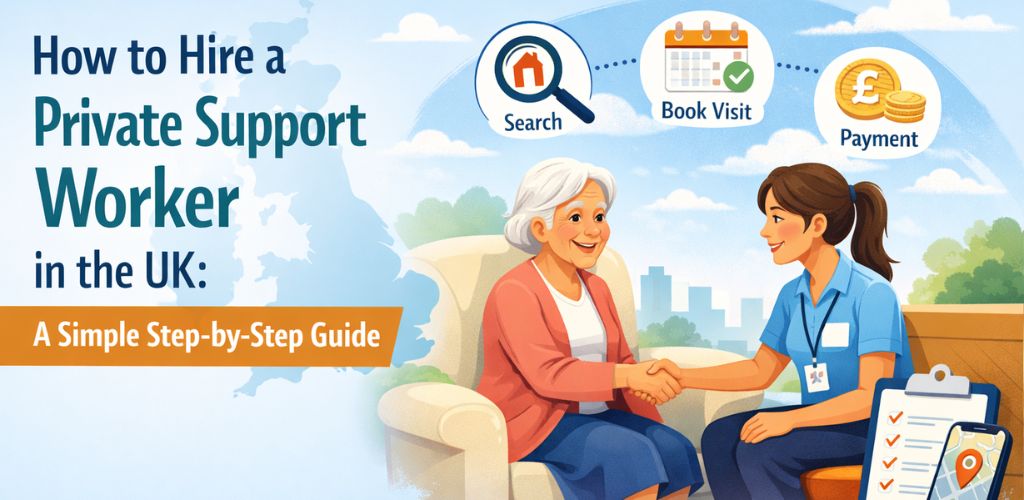
A practical guide to finding, vetting and booking a private support worker in the UK—plus costs, questions to ask, and safety checks.
Hiring a private support worker can help an older person stay independent at home—whether you need companionship, personal care, help with shopping, or support after a hospital stay. This guide explains how to hire a private support worker in the UK safely and confidently.
1) Decide what support you need
Start by writing down what you need help with and how often:
Personal care (washing, dressing, toileting)
Meal preparation and hydration reminders
Medication prompts (not administering unless trained/authorised)
Companionship and social support
Light housekeeping and shopping
Mobility support and appointments
Tip: If your needs are complex (e.g., dementia behaviours, hoisting, clinical tasks), you may need a worker with specialist experience.
2) Choose hours, location and budget
In the UK, prices vary by region and the type of support. Clarify:
Days and times (including weekends)
Overnight support (if needed)
Your postcode and travel expectations
Budget range
If you’re using Care Opt, you can search by postcode and see local availability.
3) Shortlist candidates
Look for:
Relevant experience (elderly care, dementia, mobility support)
Clear communication
Availability that matches your schedule
Professional references
- Ask the right interview questions
Use these questions to avoid surprises:
What elderly care experience do you have?
Are you comfortable with personal care tasks?
Have you supported clients with dementia or reduced mobility?
What is your approach to dignity, privacy and consent?
Can you provide references?
What would you do in an emergency?
Are you happy to follow a care plan?
Do you have the right to work in the UK?
- Safety checks (don’t skip these)
For private care, safety matters. Consider:
Identity check (photo ID)
Right to work verification
DBS check (where appropriate)
References from previous clients/employers
Clear boundaries and expectations in writing
- Agree the details before the first visit
Confirm:
Start date and arrival time
Tasks included (and not included)
Payment terms and cancellation policy
Contact details for family and emergency contacts
A written agreement helps everyone feel secure.
- Do a short trial visit
A trial visit helps you confirm:
Punctuality and professionalism
Communication style
Comfort level for the client
Quality of support
If it’s not a fit, it’s okay to choose someone else.
- Track progress and adjust
After the first few visits, review what’s working:
Is the client comfortable?
Are tasks being completed safely?
Is the schedule still right?
Small adjustments early prevent bigger issues later.
Frequently asked questions How much does a private support worker cost in the UK?
Costs vary by location and the type of support. Complex needs or unsocial hours can cost more. Always confirm the rate and what’s included.
Is it safe to hire a support worker privately?
It can be safe if you do the right checks (ID, right to work, references, DBS where appropriate) and agree expectations clearly.
What’s the difference between a carer and a support worker?
A “carer” often focuses on personal care. A “support worker” can include broader help like companionship, shopping, routines and independence support. Roles vary—clarify tasks in advance.
Next step: Search for trusted local support workers by postcode on Care Opt and book the support you need.

About the Platform
Care Opt Team
The Care Opt Editorial Team provides expert insights and resources dedicated to empowering individuals through knowledge and compassionate community support.