Support at Home After a Fall or Surgery

Published by
Care Opt Editorial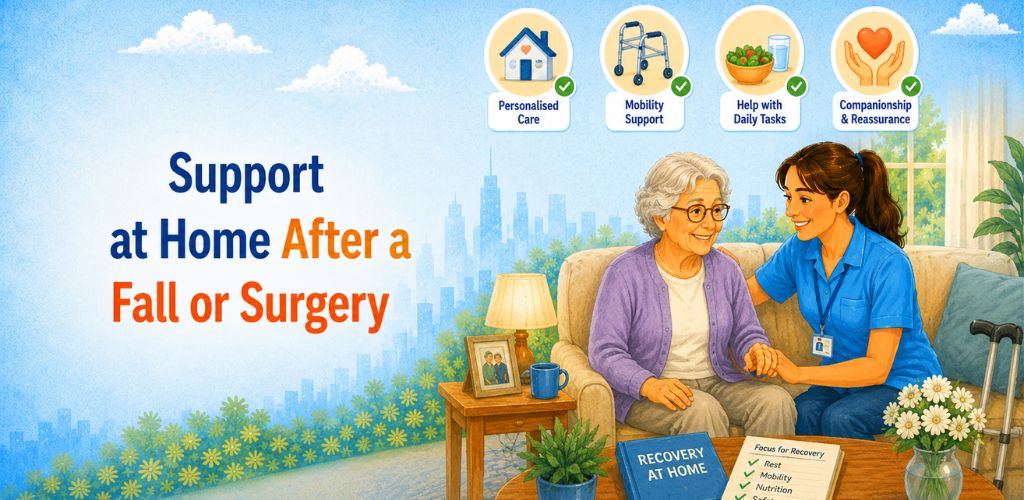
Learn what support at home may be needed after a fall or surgery, what families should check, and how to choose the right private carer.
Support at Home After a Fall or Surgery
A fall or an operation can change daily life very quickly.
Someone who was managing well a week ago may suddenly need help with walking, washing, dressing, meals, medication, stairs, or getting to follow-up appointments. For families, that often creates a practical question straight away: what kind of care at home is needed, and how do you arrange it safely?
This is especially common after a hospital stay, but it can also happen after a fall at home, an injury, or a procedure that limits mobility for a period of time. In some cases, support is only needed for a short recovery period. In others, the event reveals that longer-term help may now be needed.
In this guide, we explain what support at home after a fall or surgery can look like, how to decide what help is needed, what families should check before booking a private carer, and the mistakes that are best avoided.
Why Support at Home Matters After a Fall or Surgery
Recovery is not only about time. It is also about safety, confidence, and the right level of practical help.
After a fall, some people become less steady, more anxious about moving around, or more dependent on others for everyday tasks. After surgery, someone may temporarily struggle with mobility, pain, fatigue, wound care routines, or getting back into normal daily life.
The right support can make recovery smoother by helping with the things that are suddenly harder to manage alone. It can also reduce stress for family members who may be trying to help while balancing work, childcare, or other responsibilities.
What Kind of Help May Be Needed?
Not everyone needs the same type of support. The right arrangement depends on the person’s condition, mobility, confidence, home layout, and discharge advice.
A private carer or support worker may be able to help with:
- getting in and out of bed safely
- support with washing and dressing
- meal preparation
- medication prompts
- light household tasks
- shopping and collecting essentials
- attending follow-up appointments
- companionship and reassurance
- support with walking around the home
- help with routines during the recovery period
For some people, the need is mainly practical. For others, emotional reassurance matters just as much, especially after a frightening fall or a major procedure.
Support After a Fall
A fall can affect much more than physical movement.
Someone may lose confidence, become fearful of walking unaided, or start avoiding normal activities. Even if there is no major injury, the person may still need temporary care at home while they regain confidence and stability.
Common support needs after a fall
After a fall, support may include:
- help moving around the home more safely
- assistance with personal care
- support with meals and hydration
- checking that essentials are within easy reach
- reducing unnecessary trips up and down stairs
- help attending GP, hospital, or physiotherapy appointments
- companionship and observation during the early recovery period
If the person has fallen more than once, or there are signs of balance problems, confusion, dizziness, or reduced mobility, families should take that seriously rather than assuming it was a one-off event.
Support After Surgery
Recovery after surgery varies depending on the procedure, the person’s age, and their general health.
Some people need only light support for a short period. Others may need more structured help, especially after orthopaedic surgery, abdominal surgery, or any procedure that affects strength, movement, or pain levels.
Common support needs after surgery
A support worker may help with:
- preparing meals
- helping with safe movement around the home
- reminders about medication schedules
- support with washing and dressing
- shopping and errands
- keeping the home environment manageable
- helping the person conserve energy during recovery
- attending follow-up appointments
Families should also pay attention to the discharge advice given by the hospital and make sure home support matches that advice.
Signs That Extra Help May Be Needed at Home
Some people recover well with minimal support. Others need more help than the family first expected.
These are common signs that a person may need temporary or ongoing private care after a fall or surgery:
Reduced mobility
If the person is struggling to move safely around the house, use the bathroom, get in and out of bed, or manage stairs, support may be needed.
Difficulty with personal care
If washing, dressing, grooming, or toileting have become difficult, this should not be ignored.
Poor appetite or dehydration risk
Some people eat and drink less after illness, injury, or surgery. Practical help with meals and fluids can make a real difference.
Missed medication or confusion about routines
If medication prompts are needed, families should build that into the support plan from the start.
Anxiety about being alone
After a fall especially, some people become fearful of being left on their own. Reassurance and regular visits may help restore confidence.
Family strain
Sometimes the person is not the only one under pressure. If relatives are exhausted, overstretched, or trying to provide unsafe levels of support, extra help is sensible.
Step-by-Step: How to Arrange Support at Home
1. Start with the discharge or recovery advice
If the person has been in hospital, read the discharge information carefully. If they have had a fall at home, think about what changed afterwards and what tasks now feel unsafe or unrealistic.
Write down what support is actually needed day to day.
2. Focus on the first one to two weeks
The early recovery period is often the most important. Think about:
- morning routines
- moving around the home
- washing and dressing
- meals
- medication prompts
- appointments
- companionship
- evening support
This helps you identify whether you need one short visit a day, several visits, or longer blocks of support.
3. Look at the home environment
Families should look honestly at the practical setup.
Think about:
- stairs
- trip hazards
- loose rugs
- poor lighting
- distance to the bathroom
- whether essentials are easy to reach
- whether the person can safely prepare food
A support worker can help with daily routines, but the home itself should also be made as safe and manageable as possible.
4. Choose the right type of support
Not every situation requires the same type of carer.
Some people need a worker who can help with practical household support and reassurance. Others need someone experienced in personal care, mobility support, or recovery after surgery.
Be clear about whether the main need is:
- companionship
- practical home help
- personal care
- mobility support
- appointment support
- short-term recovery help
5. Check experience and documents
If you are booking private care, do not focus only on availability.
Ask about:
- DBS checks
- right to work in the UK
- references
- relevant experience
- training
- insurance, where appropriate
If recovery involves mobility concerns, personal care, or greater vulnerability, these checks matter even more.
6. Use a platform that helps with checks
Families are usually on safer ground when they use a platform that helps verify carers and creates a more structured booking process.
That does not remove the need for judgement, but it reduces the risk of relying only on informal recommendations or social media posts.
What to Look For in a Private Carer After a Fall or Surgery
A good match is not only about kindness. It is about suitability.
Look for someone who appears:
Calm and reassuring
The person recovering may feel vulnerable, embarrassed, or frustrated. A calm manner matters.
Reliable and punctual
Recovery routines often depend on regular support. Reliability is essential.
Practical and observant
A strong support worker notices what is becoming difficult and helps prevent small problems from becoming bigger ones.
Respectful of dignity and independence
Support should not make the person feel passive or powerless. A good worker helps without taking over unnecessarily.
Comfortable with short-term recovery support
This type of care is often about helping someone regain confidence and function, not creating long-term dependency.
Common Mistakes to Avoid
Waiting too long to arrange help
Families sometimes try to manage everything themselves until the situation becomes stressful or unsafe.
Assuming recovery support is only about personal care
Many people mainly need help with meals, routines, mobility, and reassurance rather than direct hands-on care.
Ignoring the emotional impact of a fall
A person may look physically better but still feel shaken, anxious, or afraid of falling again.
Choosing based on price alone
Cost matters, but the cheapest option is not always the safest or most suitable.
Overlooking checks and references
A private carer should be properly vetted. Families should ask sensible questions before booking.
Having no plan if needs increase
Some people recover quickly. Others do not. It is wise to think ahead about what happens if more help is needed later.
When Short-Term Support Becomes Longer-Term Care
Sometimes a fall or surgery is a temporary setback. Sometimes it reveals a bigger issue.
A person may have been coping before, but the event highlights frailty, poor balance, memory problems, or reduced ability to manage daily routines safely alone.
Families should stay open to that possibility. Short-term care at home may turn into a longer-term arrangement, and that is not a failure. It is often a realistic response to changing needs.
FAQ
What support might someone need at home after a fall?
They may need help with mobility, washing, dressing, meals, medication prompts, shopping, appointments, and reassurance.
How long is support at home usually needed after surgery?
That depends on the procedure, the person’s age, and how well they recover. Some people need support for days, others for several weeks or longer.
Can a private carer help after hospital discharge?
Yes, a private carer or support worker may help with recovery routines at home, provided the support matches the person’s needs and discharge advice.
What should families check before booking a private carer?
Ask about DBS checks, references, right to work, relevant experience, training, and insurance where appropriate.
Is support after a fall only for older people?
No. Older adults are more likely to need it, but anyone recovering from a fall, injury, or surgery may benefit from short-term help at home.
Final Thoughts
Support at home after a fall or surgery can make recovery safer, less stressful, and more manageable.
The right help can support daily routines, reduce risk, rebuild confidence, and ease pressure on families during a difficult period. The key is to be clear about what support is needed, arrange help early enough, and choose someone suitable rather than simply available.
If you are looking for trusted care at home, you can see how it works or contact us. If you are a self-employed care worker looking to connect with families, you can sign up or explore opportunities on our careers page.

About the Platform
Care Opt Team
The Care Opt Editorial Team provides expert insights and resources dedicated to empowering individuals through knowledge and compassionate community support.