What Documents Do I Need as a Self-Employed Carer?

Published by
Care Opt Editorial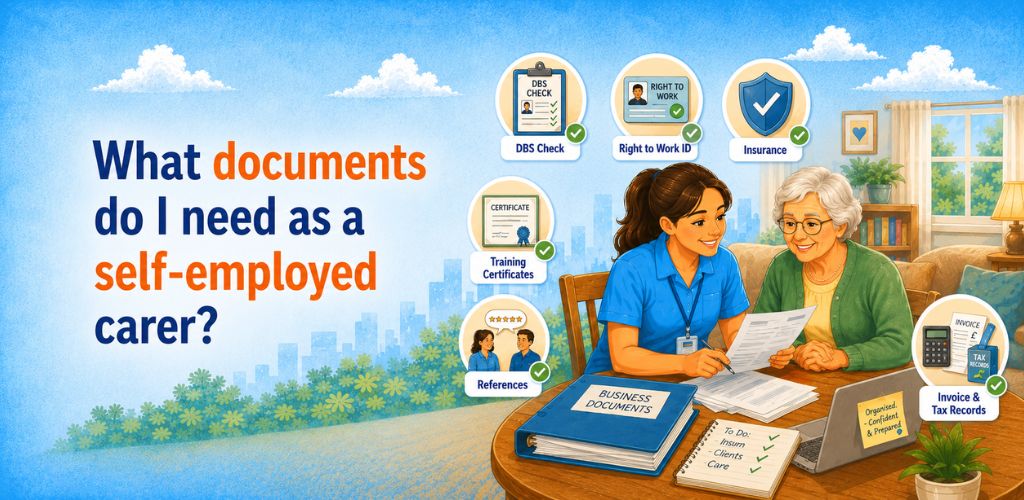
Learn what documents you need as a self-employed carer in the UK, from DBS and insurance to references, ID and right to work checks.
What Documents Do I Need as a Self-Employed Carer?
Working as a self-employed carer can offer flexibility, independence, and the chance to build direct relationships with clients and families. For many carers, it is an attractive way to work. You can choose your availability, decide which services to offer, and build a more personal way of supporting people at home.
However, self-employment in care also comes with responsibility.
If you are providing private care in the UK, clients will expect you to be organised, trustworthy, and professional. Families are inviting you into someone’s home, often at a vulnerable time. They need confidence that you are suitable to do the work, properly prepared, and able to provide safe and reliable support.
That is why having the right documents matters.
In this guide, we explain the main documents a self-employed carer should have, why they matter, and what families are likely to ask for before agreeing to support. Whether you are just starting out or reviewing your paperwork, this checklist will help you present yourself professionally and work more safely.
Why Documents Matter for Self-Employed Carers
When families look for a private carer, they are not only comparing experience and personality. They are also looking for reassurance.
Documents help show that you are:
- Who you say you are
- Legally allowed to work in the UK
- Suitable to support vulnerable people
- Properly prepared for the role
- Serious about working professionally
Good paperwork does not make someone a good carer on its own. But poor or missing paperwork is often a warning sign.
If you want to work as a self-employed care worker, having the right documents in place will make it easier to build trust, join reputable platforms, and secure work with confidence.
Core Documents Every Self-Employed Carer Should Have
Some documents are essential. Others are strongly recommended. Together, they help create a safer and more professional arrangement for both you and your clients.
1. Proof of Identity
You should be able to prove your identity clearly and consistently.
This may include:
- Valid passport
- UK driving licence
- Biometric residence permit, where relevant
- Other official photo identification
Families and platforms may ask for ID checks before allowing you to work with clients. This is a basic but important part of safer recruitment and verification.
2. Right to Work in the UK
If you are working in the United Kingdom, you need documents showing that you have the legal right to work here.
Examples may include:
- British or Irish passport
- Visa or immigration documents
- Share code and supporting documents, where applicable
A professional self-employed carer should expect this check. Clients and platforms should not simply assume that everything is in order.
3. Enhanced DBS Check
One of the most important documents in private care is a DBS check.
A Disclosure and Barring Service check helps show whether there is any criminal record information relevant to the role. For carers working with vulnerable adults or children, an Enhanced DBS check is usually the most appropriate level.
Families often look for this first, and rightly so.
Why a DBS check matters
A DBS check helps provide reassurance that proper safeguarding considerations have been taken seriously. It is not a guarantee of suitability, but it is a key part of safer working.
Keep it up to date
If your DBS is old, clients may ask whether it is still current. Keeping checks updated helps maintain trust.
4. References
If you are offering private care, strong references are one of the best ways to show that you have done this work properly before.
References may come from:
- Previous employers
- Care agencies
- Healthcare settings
- Families or clients, where appropriate
- Supervisors or managers from relevant roles
Good references should ideally confirm your reliability, punctuality, professionalism, attitude, and experience.
Why references matter
Families may not know you personally. References give them another source of reassurance beyond your own claims or profile description.
If someone is looking for a private carer, they are right to ask for references before making a decision.
5. Public Liability Insurance
Insurance is often overlooked by new self-employed carers, but it matters.
Public liability insurance can help protect you if a claim is made against you in relation to injury or damage connected to your work. Depending on the services you offer, you may also want to consider professional indemnity or other specialist cover.
Why insurance matters
Even careful carers can face unexpected situations. Insurance shows that you are thinking seriously about risk and professional responsibility.
Some clients and platforms will expect proof of cover before they allow you to start working.
6. Training Certificates
Clients often want to know whether a self-employed care worker has relevant, up-to-date training.
This may include certificates in areas such as:
- Safeguarding adults
- Moving and handling
- Basic life support
- Infection prevention and control
- Medication awareness
- Food hygiene
- Dementia awareness
- Autism awareness
- Learning disability awareness
- First aid
The exact training needed depends on the type of support you provide. If you are offering specialist support, your training should reflect that.
Do not rely on old certificates alone
Training should be reasonably current and relevant to the work. A certificate from many years ago may not reassure families if it has not been refreshed.
7. CV or Professional Profile
A clear CV or profile is not a legal requirement, but it is highly useful.
It should summarise:
- Your care experience
- Types of support provided
- Specialist skills
- Relevant training
- Areas you cover
- Availability
- Languages spoken, where relevant
A professional profile makes it easier for families to understand whether you are likely to be a good match.
8. Service Agreement or Terms of Work
If you are self-employed, you should have a simple written agreement setting out how you work.
This may cover:
- The type of support provided
- Hours and availability
- Rates and payment terms
- Cancellation arrangements
- Boundaries of the role
- What happens if you are unavailable
- Confidentiality expectations
This protects both you and the client. It also helps avoid misunderstandings later.
9. Record-Keeping Documents
A professional self-employed carer should keep good records.
Depending on the nature of the support, this may include:
- Visit notes
- Medication prompt records
- Incident notes
- Contact details
- Care instructions provided by families
- Emergency information
You do not need to create unnecessary paperwork, but you do need clear and sensible records where the role requires them.
10. Business Registration and Tax Records
If you are self-employed, you are responsible for managing your own tax affairs.
This means you should have:
- HMRC registration as self-employed, where applicable
- A record of income and expenses
- Invoices or payment records
- A method for tracking earnings
Families may not always ask for this directly, but it is part of working properly and lawfully as a self-employed professional.
Documents That May Also Be Important
Depending on the work you do, there may be additional documents worth having.
Specialist training evidence
If you support people with dementia, autism, palliative needs, or learning disabilities, relevant specialist training can strengthen your profile.
Driving documents
If your role includes taking clients to appointments or outings, you may need:
- A valid driving licence
- Proof of insurance
- MOT details, where relevant
Proof of address
Some platforms or families may ask for recent proof of address as part of identity verification.
How Families and Platforms Use These Documents
Families looking for private care are often trying to reduce risk while finding someone suitable.
They may use your documents to check:
- Your identity
- Your right to work
- Your experience
- Your safeguarding suitability
- Your professionalism
- Whether you are ready to work safely in someone’s home
A reputable platform may also verify some of these documents before listing you. That can help make the process more structured and give families more confidence.
Still, no document replaces judgement. Background checks and paperwork reduce risk, but families should also consider communication, attitude, reliability, and fit.
Step-by-Step Checklist for Self-Employed Carers
If you are setting yourself up as a self-employed carer, this is a practical order to follow.
1. Get your ID and right to work documents ready
Make sure you have clear, current documents available.
2. Apply for or update your DBS check
This is one of the first things clients will want to know about.
3. Gather references
Contact previous employers, managers, or relevant professional contacts.
4. Review your training
Check which certificates are current and whether you need refreshers.
5. Arrange insurance
Do not leave this until later. It is part of working responsibly.
6. Create a simple professional profile
Summarise your experience, service areas, and availability.
7. Put basic terms in writing
Make sure you have a clear way of setting expectations with clients.
8. Register and organise your records
Keep track of income, expenses, and work-related documentation properly.
Common Mistakes to Avoid
Starting work without a DBS check
This can make families lose confidence immediately.
Relying only on word-of-mouth
Recommendations help, but you still need proper documents.
Using outdated training certificates
Old training without refreshers can weaken trust.
Not having insurance
This creates unnecessary risk for both you and the client.
Being vague about your experience
A clear profile and supporting references make a big difference.
Ignoring written agreements
Even simple care arrangements can go wrong without clear expectations.
Thinking self-employment means less formality
It usually means more responsibility, not less.
FAQ
Do I need a DBS check to work as a self-employed carer?
In practice, yes, you should have one if you are supporting vulnerable people. Families and platforms will usually expect it.
What insurance do I need as a self-employed carer?
Public liability insurance is commonly expected. Depending on your work, additional cover may also be sensible.
Should I ask previous employers for references?
Yes. References are one of the strongest ways to show reliability and experience.
Do I need qualifications to work as a private carer?
Not every role requires formal qualifications, but relevant training and experience are very important. Families will often expect evidence of both.
What documents do platforms usually check?
This often includes ID, right to work, DBS, training, references, and sometimes proof of address or insurance.
Can I start working before all my documents are ready?
That is risky and unprofessional. It is better to get your paperwork in order before taking on clients.
Final Thoughts
If you want to succeed as a self-employed carer, having the right documents in place is not optional. It is part of working safely, professionally, and responsibly.
Families looking for private care want more than a kind personality. They want reassurance that the person entering their home is properly checked, experienced, and prepared for the role. The right documents help provide that reassurance.
At the same time, paperwork should support good care, not replace it. Clients will still judge you on your communication, reliability, boundaries, and approach. Documents open the door, but professionalism keeps it open.
If you are a self-employed care worker looking to connect with clients, you can sign up or explore opportunities on our careers page. If you are a family looking for trusted support at home, see how it works or contact us.

About the Platform
Care Opt Team
The Care Opt Editorial Team provides expert insights and resources dedicated to empowering individuals through knowledge and compassionate community support.