How Much Does Private Care at Home Cost in the UK?

Published by
Care Opt Editorial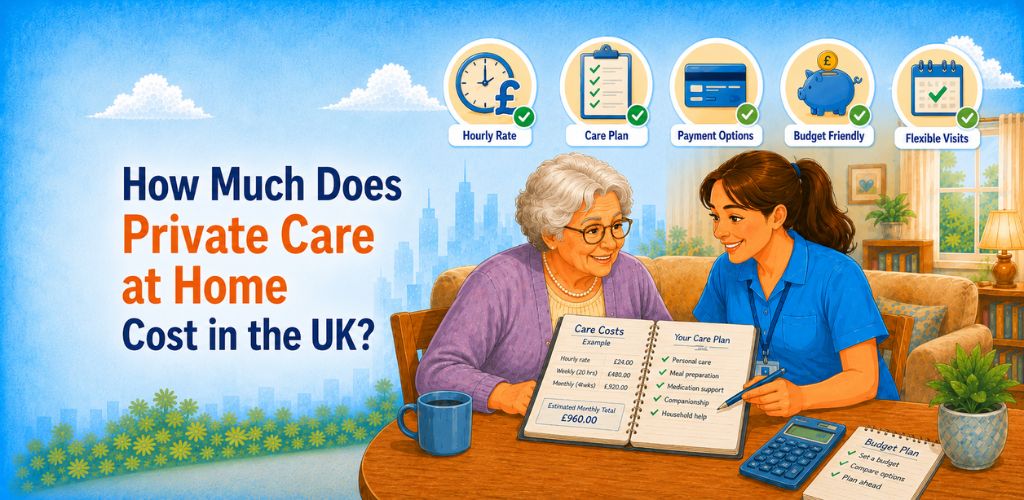
Learn how much private care at home costs in the UK, what affects the price, and how to budget when booking a private carer directly.
How Much Does Private Care at Home Cost in the UK?
If you are looking into private care at home for yourself, a parent, or another loved one, one of the first questions you are likely to ask is: how much does it cost?
When booking a private carer directly rather than going through a domiciliary care agency, the answer can vary quite a lot. There is no single fixed national price. Costs depend on the type of support needed, where you live, how many hours are required, and whether the carer is offering general support or more specialist care.
For families, the important thing is to understand what affects the price, what is usually included, and how to budget properly before making a decision. The cheapest option is not always the safest or the best value. Good care at home should be reliable, appropriate, and arranged in a way that protects the person receiving support.
In this guide, we explain what families should expect when booking a private carer in the UK, what influences the cost, what extra expenses to watch for, and how to make a sensible decision.
Typical Cost of Private Care at Home in the UK
If you are booking a private carer directly, a realistic guide is that care at home often costs somewhere between £15 and £30 per hour.
Some carers may charge less for lighter support such as companionship, shopping, or general household help. Others may charge more for personal care, dementia support, autism support, learning disability support, palliative care, night support, or more complex needs.
In many cases, the hourly cost will depend on:
- The level of support needed
- The carer’s experience
- The carer’s training and checks
- Your location
- The length and timing of visits
- Whether the support is ongoing or occasional
It is important to understand that these are guide prices, not official fixed rates. In practice, one family may pay far less than another depending on the arrangement.
Why Costs Vary So Much
Many people expect there to be one average price for private care in the UK, but the reality is more complicated.
Location matters
Private care is usually more expensive in London and some parts of the South East than in other parts of the country. Travel time, general living costs, and local market rates can all push prices up.
Type of support matters
A support worker providing companionship and help with shopping will often charge differently from a carer providing personal care or specialist support.
For example, support with the following may increase the price:
- Personal care
- Dementia care
- Palliative support
- Autism support
- Learning disability support
- Behaviour support
- Recovery after illness or surgery
- Night support
Experience matters
A private carer with strong references, relevant experience, a current DBS check, good training, and a professional profile may charge more. That does not necessarily mean they are expensive. In many cases, they are simply charging at a level that reflects competence and professionalism.
Visit length matters
Short visits can cost more in real terms. Even if the hourly rate looks similar, very short bookings may be less cost-effective because travel and time still need to be covered.
Timing matters
Evenings, weekends, and bank holidays may attract a higher rate. Urgent or last-minute bookings may also cost more.
What Services Are Usually Included?
The cost of care at home depends partly on what the carer is actually being asked to do.
A private carer may help with:
- Companionship
- Personal care
- Dressing and grooming
- Meal preparation
- Shopping and errands
- Light household tasks
- Laundry
- Medication prompts
- Mobility support
- Support with appointments
- Community access
- Routine-based support at home
Some carers offer mainly practical daily support. Others provide more specialist or structured care. The more tailored and complex the support, the more likely the price will rise.
Example Private Care Costs
These are example calculations to help families think about budgeting. They are not fixed market rates, but they are useful as a rough planning guide.
Example 1: Occasional weekly support
If a family books 5 hours per week at £16 per hour, the cost would be:
- £80 per week
- Around £347 per month
This might suit someone who mainly needs companionship, help with shopping, and basic support around the home.
Example 2: Regular support through the week
If support is needed for 10 hours per week at £18 per hour, the cost would be:
- £180 per week
- Around £780 per month
This may suit someone who needs help with meals, routines, light household tasks, and general wellbeing support.
Example 3: Daily care at home
If a person needs 21 hours of support per week at £20 per hour, the cost would be:
- £420 per week
- Around £1,820 per month
This may apply where there is a mix of personal care, companionship, and daily support.
Example 4: More specialist support
If support is provided for 28 hours per week at £24 per hour, the cost would be:
- £672 per week
- Around £2,912 per month
This kind of arrangement may reflect more specialist support needs or more intensive help across the week.
Extra Costs Families Sometimes Miss
One of the biggest mistakes families make is focusing only on the hourly rate.
The hourly price is important, but it may not be the full picture.
Travel and mileage
Some carers include travel within their rate. Others may charge separately, particularly if the journey is longer or parking costs apply.
Minimum visit lengths
A carer may require a minimum booking length, especially if the work involves travel. A one-hour minimum is common, and some workers may expect more.
Bank holiday or weekend rates
Support on bank holidays, weekends, or evenings may cost more than weekday daytime support.
Cancellation charges
Some private carers may charge for late cancellations. It is sensible to check this before agreeing anything.
Overnight support
Sleeping nights or waking nights are usually priced differently from daytime support and can increase the overall cost significantly.
Replacement cover
If your regular private carer is unavailable, what happens? Some direct arrangements may not include easy replacement cover, which can create additional stress or extra cost.
Is a Private Carer Cheaper Than a Care Agency?
Sometimes yes, but not always.
A directly booked private carer may cost less than a traditional care agency because there are fewer business overheads built into the price. Families also often feel they are getting better value because they are paying more directly for the person providing support.
However, this should not be oversimplified.
A lower hourly rate does not always mean better value. If the carer has poor availability, limited checks, no backup plan, or lacks experience, problems can arise quickly. On the other hand, a more experienced self-employed carer may charge more but provide better continuity, stronger communication, and a more personal service.
The better question is not simply, “Which option is cheapest?” It is, “Which option offers safe, suitable, sustainable support for the person who needs care?”
What Should Families Check Before Booking?
When comparing private care options, cost is only one part of the decision.
Before booking a carer, families should ask about:
- DBS checks
- Right to work in the UK
- References
- Relevant training
- Experience with similar needs
- Insurance, where appropriate
- Availability
- Areas covered
- What is included in the rate
- Cancellation terms
This is especially important when booking private care directly. Families should not assume that because someone seems friendly or experienced, everything else is automatically in place.
It is also sensible to use a platform that helps with background checks and profile verification. This reduces risk and makes it easier to compare suitable carers more confidently.
Step-by-Step: How to Budget for Care at Home
1. Be clear about the support needed
Write down what kind of help is actually required. Is it companionship, personal care, specialist support, meal preparation, shopping, or help with appointments?
Being specific helps you compare carers properly.
2. Estimate the weekly hours
Think in terms of weekly need, not just daily visits. This makes the monthly cost much easier to understand.
3. Ask what the rate includes
Always ask whether the hourly rate includes travel, parking, short visits, evening work, weekends, or specialist support.
4. Think about continuity
If the person receiving support relies on routine and familiarity, consistency may matter more than choosing the lowest-cost option.
5. Check suitability, not just price
A more suitable worker who communicates well, has relevant experience, and provides reliable support is often better value in the long run.
6. Start small if needed
If possible, begin with a smaller arrangement and increase support over time if needed. This allows the family and the person receiving care to assess whether the match is right.
Common Mistakes to Avoid
Choosing based on price alone
The cheapest option is not always the safest or the most reliable.
Not asking what is included
Two carers may quote different hourly rates, but one may include travel and another may not.
Ignoring references and checks
A professional private carer should expect questions about DBS, references, and experience.
Being vague about needs
If you are not clear about what support is required, it becomes much harder to compare prices properly.
Not planning for changes
Care needs often increase over time. Families should think ahead about what happens if more support becomes necessary later.
Can Financial Support Help?
Some people arranging care at home may qualify for financial help, depending on their circumstances.
This can include support such as:
- Local authority assessments
- Personal budgets
- Direct payments
- Attendance Allowance
- Other benefits or funding routes
Not everyone will qualify, and funding rules can be complex. Still, it is worth checking rather than assuming all care costs must be covered privately.
FAQ
How much does a private carer cost per hour in the UK?
A reasonable guide is often £15 to £30 per hour, depending on location, support type, visit length, and the carer’s experience.
Why do some private carers charge more?
Usually because they have more relevant experience, stronger checks, better training, specialist skills, or are providing more complex support.
Is private care cheaper than an agency?
It can be, but not always. The total value depends on what is included, the quality of the support, and whether the arrangement is sustainable.
What affects the cost of care at home the most?
The main factors are location, complexity of support, timing of visits, experience, and total hours required.
Should I choose the cheapest carer?
Not automatically. Suitability, reliability, safety checks, and experience matter just as much as price.
Final Thoughts
If you are arranging care at home in the UK, the most sensible approach is to budget using a realistic range rather than looking for one fixed national price.
For directly booked private care, many families will find the cost sits somewhere between £15 and £30 per hour, with some arrangements costing less and others costing more depending on what is needed.
The key is to look beyond the headline rate. Think about the type of support required, the worker’s experience, what checks are in place, and whether the arrangement feels safe and practical in the long term.
If you are looking for trusted private care at home, you can see how it works or contact us. If you are a self-employed care worker looking to connect with families, you can sign up or explore opportunities on our careers page.

About the Platform
Care Opt Team
The Care Opt Editorial Team provides expert insights and resources dedicated to empowering individuals through knowledge and compassionate community support.